
Sciatica Treatment in Newport Beach, CA
When Leg Pain Won't Let You Sit, Stand, or Sleep
Sciatica isn't one condition, it's a pattern of nerve irritation that can come from several different sources in your low back, pelvis, or hip. That distinction matters, because treating a disc-driven sciatica the same way you'd treat a piriformis-driven sciatica often explains why patients tell us "I tried physical therapy and stretching and nothing helped."
At OC Well Studio, we start by identifying which kind of sciatica you have, then build a treatment plan around that using dry needling, chiropractic care, acupuncture, and movement-based rehab in the combination that actually fits your case.
Common Symptoms
Pain traveling from the low back or buttock down the leg
Burning, tingling, or numbness along the back or side of the leg
Leg weakness or a feeling of the leg "giving out"
Pain that worsens with prolonged sitting
Pain that worsens with standing or walking
Deep, aching buttock pain that doesn't clearly radiate
What's Actually Causing Your Sciatica?
"Sciatica" describes the symptom — nerve irritation — not the cause. Two patients with identical leg pain can have completely different sources, and treating the wrong one is the most common reason people don't get lasting relief. In our evaluation, we're distinguishing between:
Disc-related sciatica.
A bulging or herniated disc can press directly on the nerve root as it exits the spine. This type often comes with a clear pattern: pain that worsens with sitting or forward bending, and sometimes numbness that follows a specific strip of the leg.
Piriformis and deep gluteal syndrome.
The sciatic nerve runs directly beneath (and sometimes through) the piriformis muscle in the glute. When that muscle is tight or irritated, it can compress the nerve without any disc involvement at all — which is why patients with normal MRIs are often told "there's nothing wrong" and sent away without relief.
SI joint and hip dysfunction.
Dysfunction in the sacroiliac joint or hip can refer pain into the same distribution as true sciatica, mimicking nerve pain without actual nerve compression.
Spinal stenosis.
Narrowing of the spinal canal, more common with age, can create nerve irritation that's often worse with standing and walking and better with sitting — essentially the opposite pattern of a disc issue.
Our Approach to Sciatica Treatment
A Team Built for Cases Like This
Sciatica rarely has one clean cause, which is why your evaluation isn't limited to a single lens. Our team includes doctors of chiropractic, licensed acupuncturists, and massage therapists trained in myofascial release, along with dry needling — led by Tara Pierce, DC, MACM, LAc, who is certified in the technique — to address deep muscular contributors like the piriformis. Whether your pain is coming from a disc, a joint restriction, or deep muscle tension, someone on our team is trained to identify it and treat it directly, not refer you elsewhere.
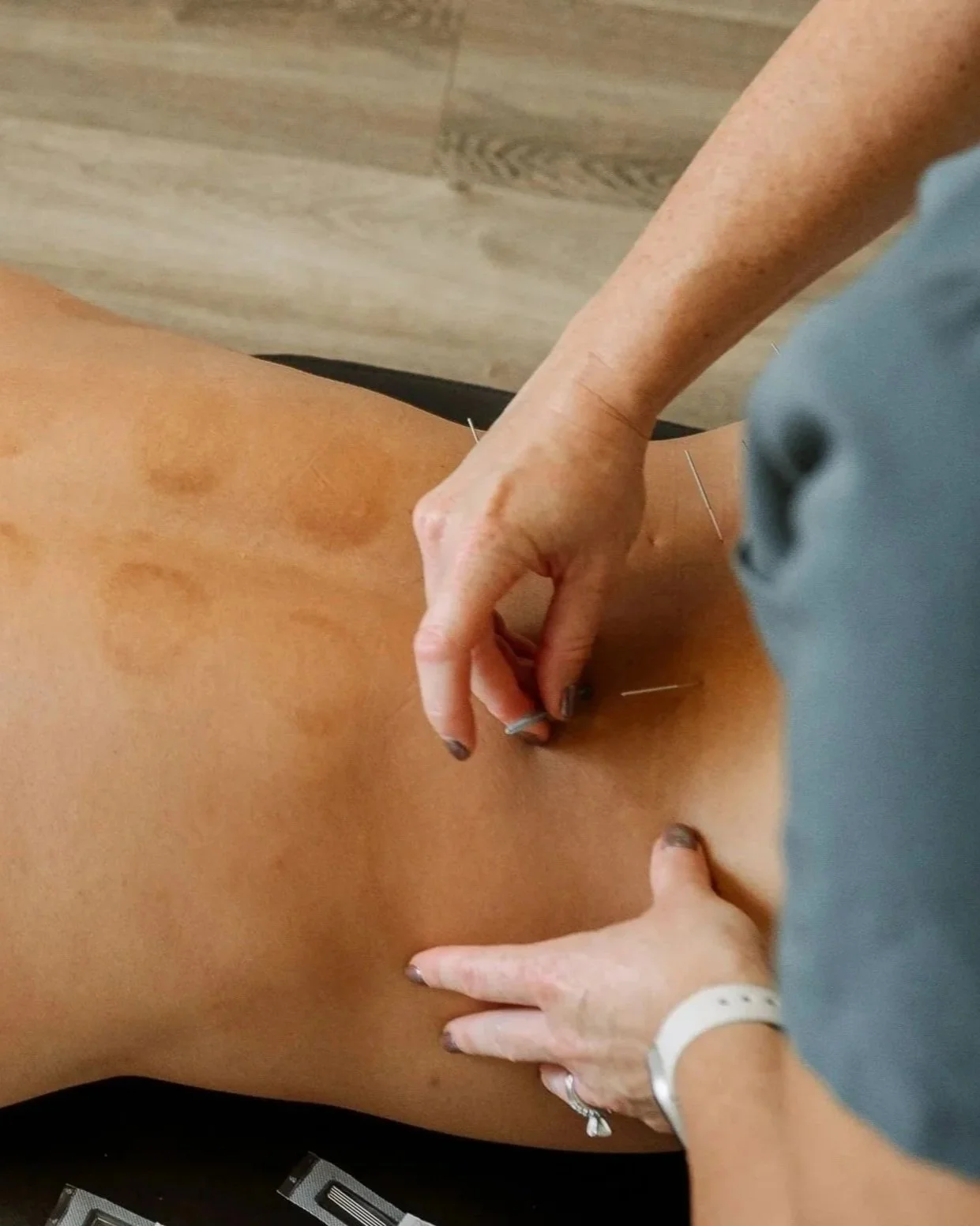
Dry needling is often where we start. When muscle tension in the glutes, piriformis, or deep hip rotators is contributing to nerve irritation, which is more common than most patients expect, dry needling directly releases that tension at the source. This is often the fastest way to reduce nerve-related symptoms when the cause is muscular rather than structural.
Chiropractic care addresses the mechanical piece. When we find restriction or dysfunction in the low back, pelvis, or SI joint, gentle chiropractic adjustment or mobilization can reduce the mechanical irritation feeding the nerve. Myofascial release and deep tissue massage are often incorporated to reduce muscle tension and ease symptoms as well.
Acupuncture supports the nervous system response. For patients with more sensitized or chronic nerve pain, acupuncture can help calm the irritated tissue and reduce overall pain signaling, especially alongside the more targeted work above.
Movement and exercise make it stick. Sciatica has a high recurrence rate when the underlying movement pattern or muscle imbalance isn't addressed. Once your acute symptoms are under control, we build a specific mobility and strengthening plan so this doesn't come back in six months.
What to Expect at Your First Visit
Your first visit is built specifically to figure out which type of sciatica you have. Expect:
A detailed history of when and how your symptoms started, and what makes them better or worse
Movement and orthopedic testing to differentiate disc, piriformis, SI joint, and stenosis-driven patterns
Palpation of the low back, glutes, and hip to identify muscular contributors
A treatment plan built around what we find that day and not a one-size protocol
In most cases, we begin hands-on treatment during the same visit
Who We See
A large share of our sciatica patients have already been through a round of general physical therapy or been told to "just stretch it out" without lasting improvement. Often, that's because the muscular component — particularly piriformis involvement — wasn't specifically addressed. When we identify and treat that piece directly, patients frequently notice a difference within the first few visits, even after months of symptoms elsewhere.
If Sciatica Has Lasted More Than a Few Weeks, It's Worth a Proper Evaluation.
Sciatic pain that's stuck around this long usually isn't going to resolve with more stretching or waiting. Let's identify what's actually driving it. If you're dealing with sciatica, leg pain, numbness, or persistent low back pain, our team can help identify the cause and create a treatment plan designed to get you back to living comfortably.
Frequently Asked Questions
-
No. While disc injuries are a common cause, many patients experience sciatic-type symptoms from muscle tension (especially the piriformis), hip dysfunction, or SI joint irritation — with a completely normal spine.
-
Yes. The piriformis is a deep muscle, but it's reachable with dry needling, and for patients whose sciatica is muscular in origin, this is often the most direct way to reduce nerve compression.
-
Not necessarily. Imaging is useful in certain cases, but many types of sciatica — particularly muscular and joint-related causes — won't show up clearly on an MRI. Our physical evaluation is often more useful for these types.
-
This depends on whether your case is primarily muscular, mechanical, or disc-related, and how long you've had symptoms. Muscular/piriformis-driven cases often respond within a handful of visits; disc-related or longstanding cases typically take longer.
-
Many patients with PPO insurance have out-of-network benefits that can be used toward treatment here. We're happy to help you check your coverage before your first visit.